
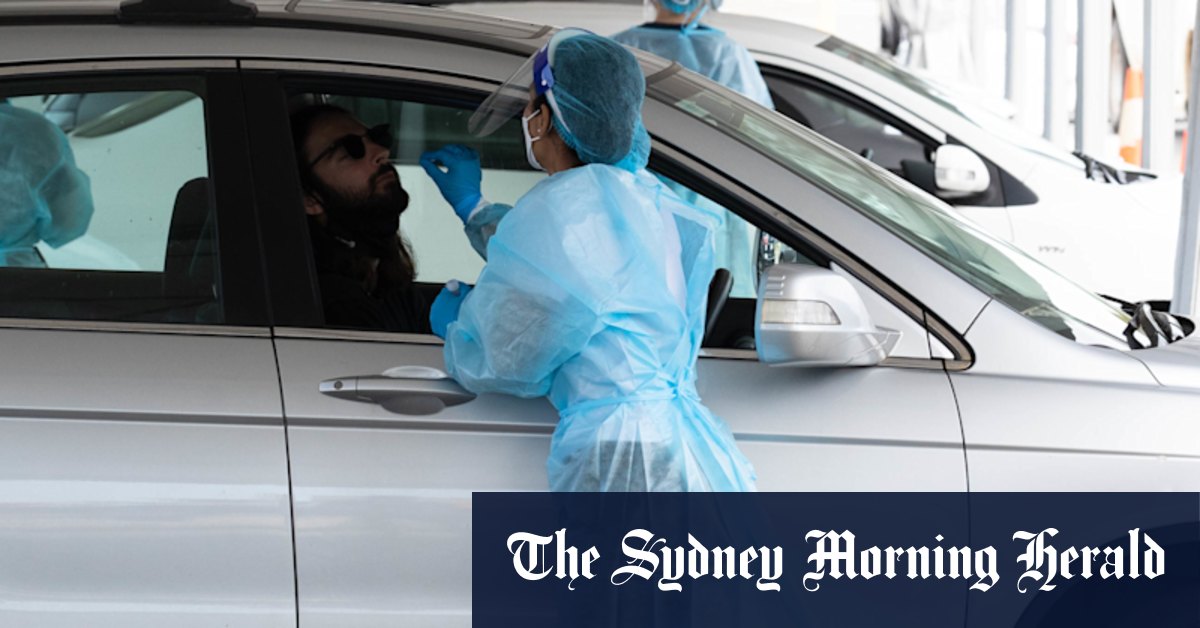
The number of people in hospital with COVID-19 has remained relatively stable: 166 cases, including 24 in intensive care.
NSW reported one additional COVID-19 death on Wednesday: a woman in her 90s who died at the Gillawarna Village Aged Care Facility at George’s Hall, where she caught the virus. She is the third person to die from COVID-19 at the aged care home.
For the NSW population aged 16 and over, 94.8 per cent have had one COVID-19 vaccine dose and 93.2 per cent are fully vaccinated.
In 12- to 15-year-olds, the first-dose coverage is 81.4 per cent, and double-dose is 77.8 per cent.
NSW Premier Dominic Perrottet, Health Minister Brad Hazzard, Chief Health Officer Kerry Chant and NSW Health Deputy Secretary Susan Pearce are due to provide a COVID-19 update at midday.
A raft of restrictions eased in NSW on Wednesday, with density limits scrapped, QR codes no longer required in certain businesses including supermarkets and shopping centres, and masks only needed on public transport, at airports and on planes, and for unvaccinated indoor hospitality staff.
Meanwhile, Queensland Health on Tuesday night confirmed a positive COVID-19 case had been detected and linked to two flights from Monday, December 13: VA1105 from Newcastle to Brisbane and VA375 from Brisbane to Townsville.
The state opened its border to quarantine-free travel with NSW on Monday. All passengers on both flights were categorised as close contacts, deviating from the approach to identify those in particular plane seat rows as close contacts.
However, Queensland Health Minister Yvette D’Ath confirmed on Wednesday only those people either travelling with or seated directly around the case on the two flights would remain close contacts, and the remainder would be deemed casual contacts who need to get tested and isolate until they get a negative result.
She said authorities were treating the case as if it was the Omicron variant and had acted cautiously overnight as health officials worked out their approach and spoke with interstate counterparts, before deciding the “normal rules” for flights would return.
Loading
“We don’t need to wait until we get the findings of whether it’s Omicron because if it is, we still will apply these rules,” Ms D’Ath said.
On Tuesday night, NSW brought quarantine requirements for people flying in from eight southern African countries in line with other international arrivals, following Victoria’s lead earlier this week.
All fully vaccinated international arrivals in NSW must self-isolate for 72 hours and have a COVID-19 test in the first 24 hours of arrival. They can leave isolation when 72 hours have passed and they have a negative result.
NSW Health said fully vaccinated arrivals from South Africa, Lesotho, Botswana, Zimbabwe, Mozambique, Namibia, Eswatini (Swaziland) and Malawi will no longer have to enter 14-day quarantine.
Fully vaccinated people from the above listed countries who are already in NSW hotel quarantine, as of Wednesday, will have to stay there until at least 72 hours after they arrived.
NSW Health advised these arrivals to avoid high-risk settings for seven days and have an additional PCR test on day six. The health department also strongly encouraged them to have another test on day 12.
Late last month, countries placed travel bans or additional restrictions on southern African countries after scientists reported the Omicron variant of COVID-19.
The South African foreign ministry had said: “Excellent science should be applauded and not punished.”
Malawian President Lazarus Chakwera accused Western countries of “Afrophobia”, while South African President Cyril Ramaphosa said the restrictions were “unjustified and unfairly discriminate”.
Stay across the most crucial developments related to the pandemic with the Coronavirus Update. Sign up for the weekly newsletter.
NSW reports 1360 COVID-19 cases, highest daily total in three months
Source: Philippines Alive


