
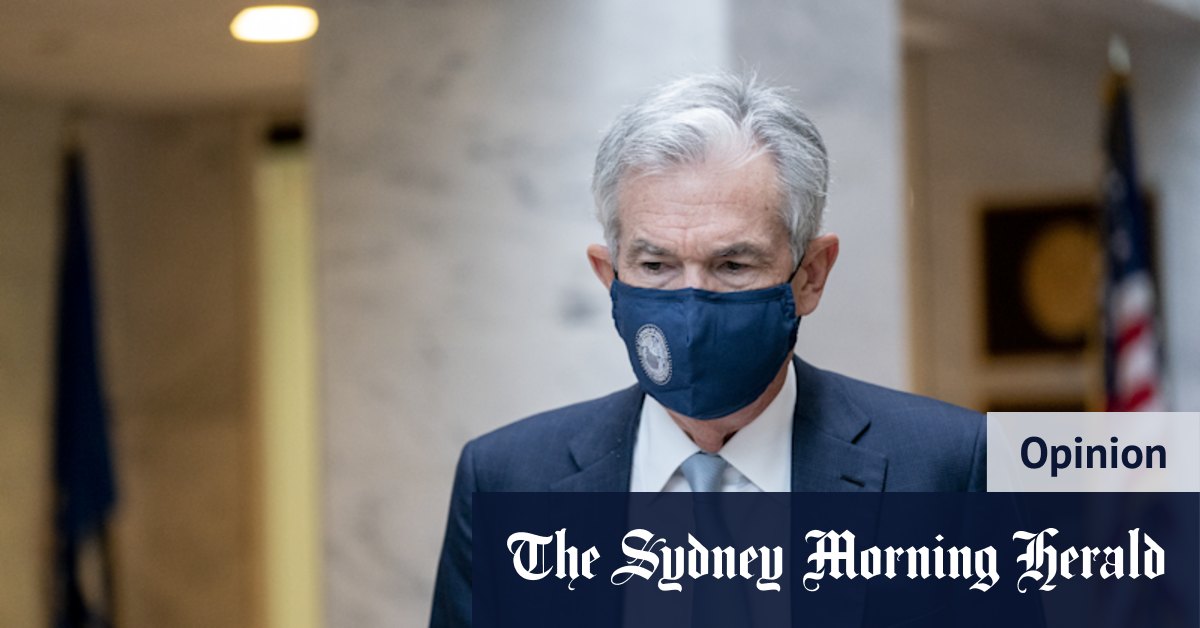
The central bankers had thought that as the US economy re-opened and recovered after the worst of the pandemic, what they saw as the transitory effects of COVID – supply chain bottlenecks, disruptions to factories, workers’ caution and a surge in the demand for consumer goods – would recede.
Instead, inflation has kept rising and spreading and appears to be becoming entrenched.
Sustained spike in inflation
Headline inflation hit 6.8 per cent last month and the Fed’s preferred measure, core inflation (which excludes food and fuel prices) jumped 4.1 per cent, their highest levels in decades.
In September, the median forecast of headline inflation this year was 4.2 per cent. Now it’s 5.3 per cent. The projection for next year was 2.2 per cent. Now it’s 2.6 per cent.
The expectation that inflation will remain elevated by recent historical standards for several years is based on economic growth that will remain stronger for longer (4 per cent growth in real GDP next year and 2.2 per cent in 2023) and unemployment that will be lower than previously expected (3.5 per cent next year).
Loading
The Fed seems to have miscalculated the impact of its highly stimulatory monetary policies and the massive fiscal splurges of the Trump and Biden administrations in response to the pandemic.
Its misjudgment/conservatism — and a change in its inflation-targeting framework after a policy review earlier this year — has left it reacting to the sustained spike in inflation rather than trying to pre-empt it as central banks have traditionally tried to do.
The risk, of course, is that it is doing too little, too late, and inflation and expectations of future inflation are becoming baked into the economy.
While the Fed said it was prepared to adjust monetary policy if risks emerged, if inflation were to become entrenched at uncomfortably high levels it would have no option but to slam on the brakes, with damaging consequences for the economy.
It is also conceivable, of course, with mutations of the coronavirus continuing to emerge and some signs that effects of the supply chain bottlenecks are reducing, that the economy slows and inflation starts to dwindle and the Fed can move to normalise US monetary policy at a slower rate.
The Fed’s new set of expectations is now aligned more closely with those factored into bond markets’ pricing. The market had factored in three rate rises next year ahead of the meeting, along with the accelerated rate of tapering.
That’s why the Fed’s statement (described by some as a “180 degree turn” had little effect on either bond or sharemarkets. The S&P 500 turned 1.6 per cent higher, and the rate-sensitive Nasdaq market rose 2.15 per cent after the announcement while bond yields barely moved, edging up a couple of basis points across the curve.
The Fed’s change in stance and more aggressive timeline for ending its quantitative easing program and raising rates has implications beyond US borders.
Loading
Since the middle of this year, when market participants started to become convinced the inflation rate would force the Fed’s hand, the US dollar has already firmed about 7 per cent against a basket of its major trading partners’ currencies.
The greenback’s strength could place pressure on other central banks to tighten their policies to avert the risk of heavy capital outflows, inflation-fuelling currency depreciation and increased debt-servicing costs for US-dollar-denominated borrowings.
Once the Fed’s shift in stance has been properly digested by investors and traders, the relative ease with which markets absorbed the changes in policy will be tested.
Turning off the tap that unleashed the torrents of liquidity the Fed poured into the system as the pandemic emerged and the prospect of a sharp and rapid increase in interest rates ought to be more unsettling to equities and bond investors – particularly investors in tech stocks with high price-earnings multiples – than the initial reaction suggested.
It does remain the case, however – as it essentially has been since central banks pioneered aggressively unconventional monetary policies in response to the 2008 financial crisis – that for most investors, there remains no real alternative to conventional financial assets such as stocks and bonds.
The Market Recap newsletter is a wrap of the day’s trading. Get it each weekday afternoon.
Turning off the tap: The Fed accelerates its big pivot to fight inflation
Source: Philippines Alive


