
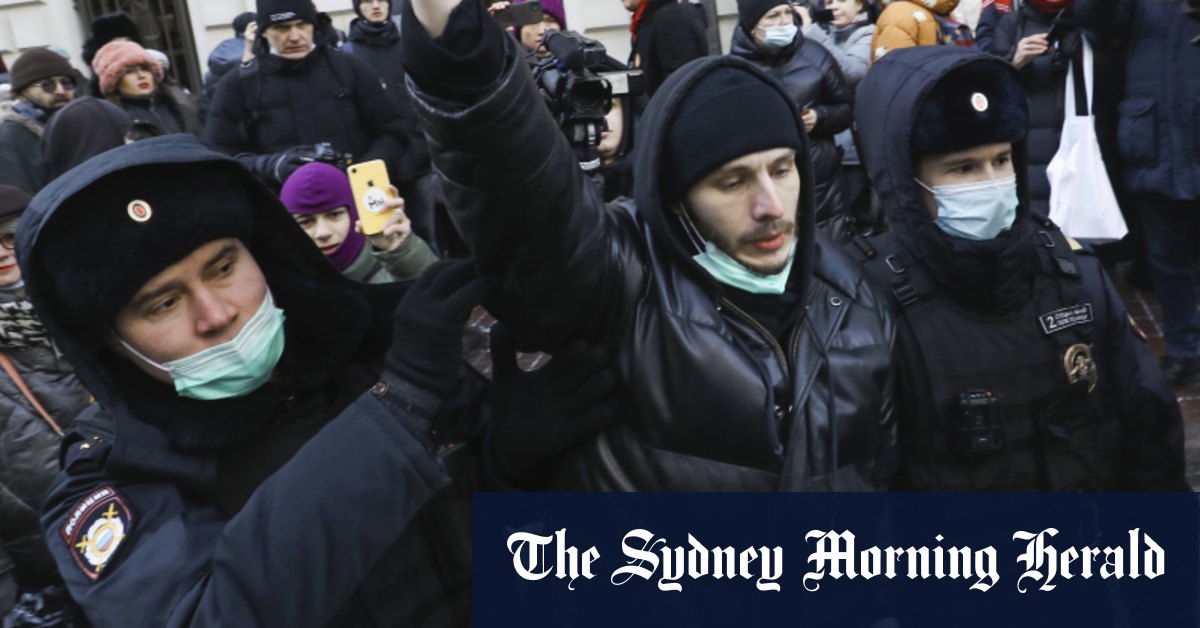
Memorial’s branch, the Memorial Human Rights Centre, is up for closure as well, with a court hearing in the Moscow City Court scheduled for Wednesday morning.
Russian authorities in recent months have mounted pressure on rights groups, media outlets and individual journalists, naming dozens as foreign agents. Some were declared “undesirable” – a label that outlaws organisations in Russia – or accused of links to “undesirable” groups, several were forced to shut down or disband themselves to prevent further prosecution.
On Saturday, the authorities blocked the website of OVD-Info – a prominent legal aid group that focuses on political arrests – and urged social media platforms to take down its accounts after a court ruled that the website contained materials that “justify actions of extremist and terrorist groups”. The group rejected the charges as politically driven.
OVD-Info condemned the ruling to shut down Memorial.
“Memorial is an institution of national memory about the times of the Great Terror and Soviet repressions,” the group said in a statement.
“To shut down such an institution is to publicly justify Stalin’s repressions,” it said. “It is a clear signal both to the society and to the elites: ‘Yes, repressions were necessary and useful to the Soviet state in the past, and we need them today as well.’”
Loading
Five allies of imprisoned opposition leader Alexei Navalny were taken into custody on Tuesday. Earlier this year, a court in Moscow outlawed Navalny’s organisations – the Foundation for Fighting Corruption and his countrywide network of regional offices – as extremist, exposing their staff members and supporters to prosecution.
One of the five detained activists detained on Tuesday, Ksenia Fadeyeva, is reportedly facing charges of forming an extremist group. Fadeyeva used to run Navalny’s regional office in the Siberian city of Tomsk, and in last year’s election won a seat in the city legislature.
Another Navalny’s ally, Lilia Chanysheva, was arrested and jailed in November on similar charges. She used to head Navalny’s office in the Russian region of Bashkortostan and is facing up to 10 years in prison, if convicted.
Navalny himself is serving 2½ years in prison for violating the terms of his probation from a 2014 embezzlement conviction that is widely seen as politically motivated. The politician was arrested in January upon returning from Germany, where he spent five months recovering from a nerve agent poisoning that he blames on the Kremlin – accusations that Russian officials reject.
Most of his top allies have faced prosecution this year on various criminal charges and have left Russia.
AP
Get a note directly from our foreign correspondents on what’s making headlines around the world. Sign up for the weekly What in the World newsletter here.
Russian court orders shutdown of renowned rights group
Source: Philippines Alive


