
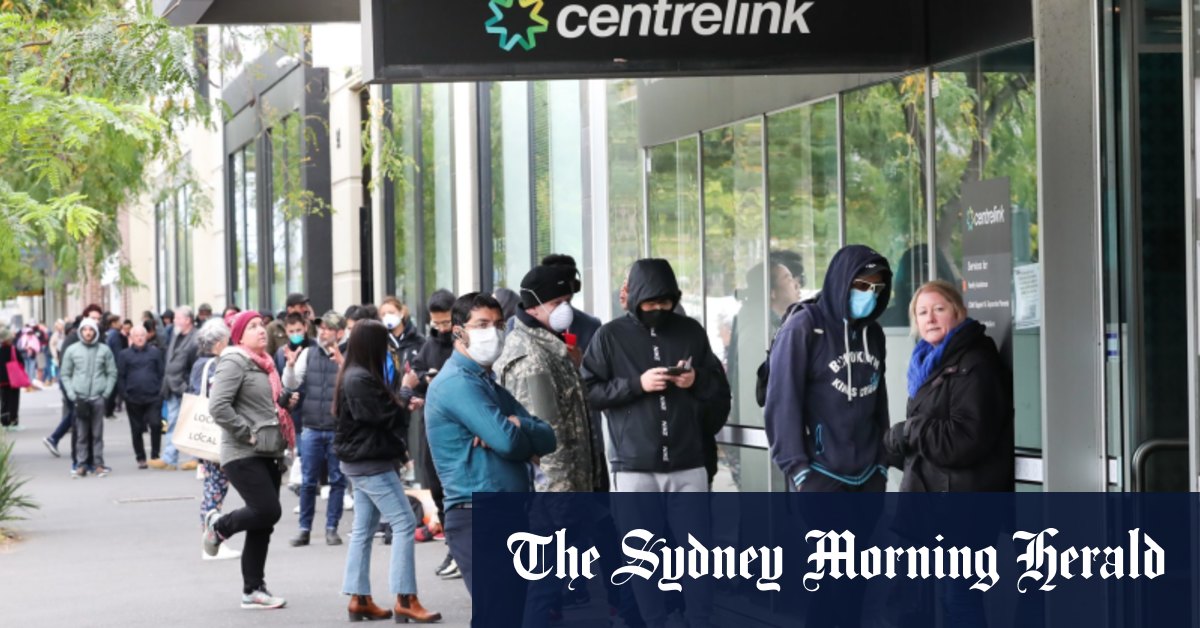
“Despite remarkable early progress in reducing poverty and income inequality during the COVID-19 recession, they are both likely to be higher now than before the pandemic. That’s the legacy of the policy response to the COVID pandemic,” she said.
The impact of the various COVID-19 support measures on overall incomes was evident in the research, with only high-income earners suffering a fall in after-tax incomes in 2020.
Loading
The result is in stark contrast with previous recessions. Following the 1981-82 recession, after-tax incomes across every bracket except the top 10 per cent fell, while the entire community went backwards after the 1991-92 recession.
Through last year’s economic recovery, and then the Delta outbreak, the research found high-income earners had benefited from the improving jobs market and asset prices, with strong growth in “high-paying” jobs and investment income.
ACOSS chief executive Cassandra Goldie said COVID-19 had proved that good social policy was also good economics.
“The COVID-19 pandemic has taught us that poverty and inequality are not an inevitable state of being. They grow because government policies allow them to, and in many cases, directly increase them,” she said.
The Morning Edition newsletter is our guide to the day’s most important and interesting stories, analysis and insights. Sign up here.
Poverty fell through the first year of COVID – and then increased
Source: Philippines Alive


