
“Hospitals are under a lot of pressure, and while the statistics are slightly worse than the year before, they haven’t slipped as dramatically as they could have,” Skinner said, adding that the strain on hospitals has increased with “surging Omicron infections and the influx of delayed and deferred care as a result of the pandemic”.
But the survey, which has run for a decade and is the biggest patient survey of its kind, has been dramatically scaled back, with the number of patient questions cut from 93 to 45 in 2020-21.
Patients are no longer asked how long they waited to be triaged by a nurse on arrival, how long they waited for treatment and if their condition deteriorated while waiting. Patients are also no longer asked if they experienced complications after being at emergency departments.
Sydney’s best and worst rated emergency departments
Best departments (satisfaction measures significantly above the state average):
- Children’s Hospital Randwick (9 of 32 measures)
- Hornsby Hospital (4 measures)
- Fairfield and Sutherland hospitals (2 measures)
Worst departments (satisfaction measures significantly below the state average):
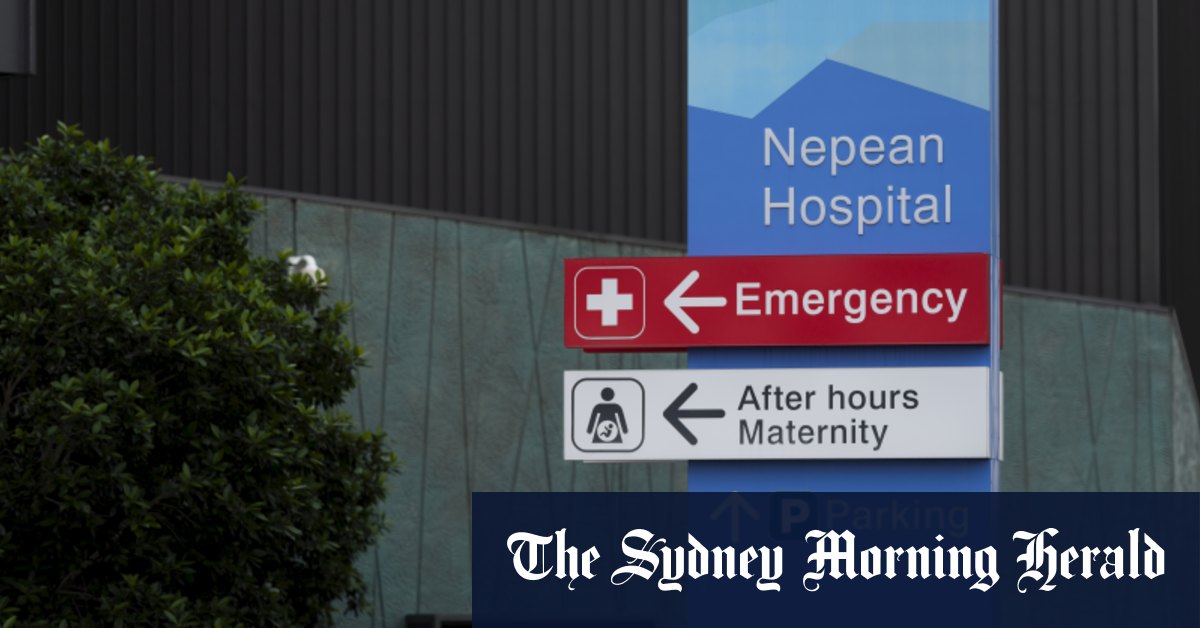
- Nepean Hospital (10 of 32 measures)
- Blacktown Hospital (9 measures)
- Bankstown-Lidcombe Hospital (4 measures)
- Campbelltown Hospital (3 measures)
Questions such as whether the hospital had adequate parking and if patients travelled to hospital in an ambulance, private car or on public transport were also cut.
A spokesperson for the Bureau of Health Information (BHI) said patients were more likely to complete all questions in the shorter questionnaire.
“We also took into account areas where there are already existing sources of information to inform improvement. For example, waiting time performance is routinely measured and published at NSW, local health district and hospital level by BHI on a quarterly basis,” the spokesperson said.
Stephen Mason, chief executive of the Australian Patients Association, said a lower level of patient satisfaction was “what we expect” given the stress on health services over the pandemic.
Loading
“The hospitals are under more pressure, they are stretched, the staff are exhausted,” Mason said, noting these situations can lead to inadequate communication with patients, which makes the greatest difference to their experience.
“If you’re going to have to wait for six hours, you’re far better off if you’re told at the outset and updated along the way. But some people are there for six hours and no one is talking to them,” he said.
Mason said he was “very disappointed” the survey had been scaled back. He said survey data was invaluable in showing how patients feel about their experience and improving services.
“We believe all health departments should be more transparent, they shouldn’t be hiding things from the public,” he said.
Patients in the dark on wait times in NSW emergency departments
Source: Philippines Alive


