
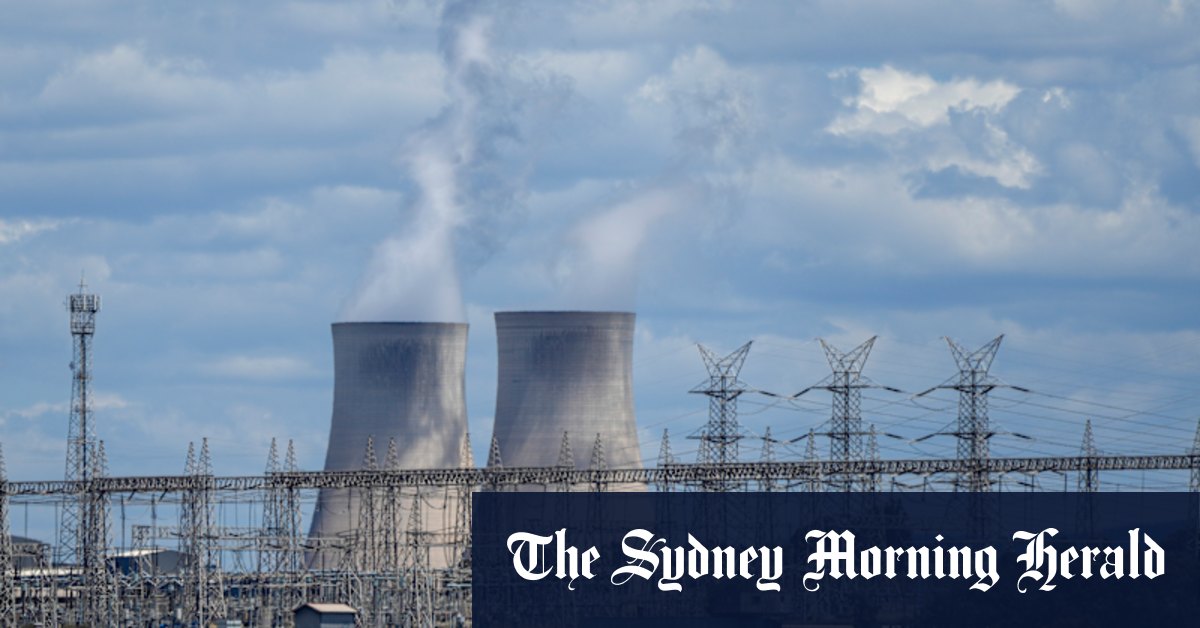
Q: Will power bills rise if energy companies keep bringing forward the closure date of their coal plants?
A: This is a contentious question without an easy answer. While retail bills have been driven to record lows this year as more renewables enter the grid, analysts say that a carefully managed and well-timed infrastructure roll out is needed to keep power prices down. The market will become more volatile if there is a lack of “dispatchable” power from either batteries, pumped hydro or gas plants to back up the intermittent supply from renewables and prices will rise. But if the policy settings and investment are enough to deliver the required backup power, cheap renewables can smoothly replace more expensive coal and gas baseload power.
Mr Cannon-Brookes said the consortium “strongly believe it will result in lower bills for consumers”.
Prime Minister Scott Morrison is sceptical about these claims and said coal plants should not shut earlier than scheduled.
“We need to ensure that our coal-fired generation of electricity runs to its life because if it doesn’t electricity prices go up. They don’t go down,” Mr Morrison said on Monday.
Q: How quickly is coal power shutting down?
A: Australian Energy Market Operator (AEMO), which manages the electricity grid, said in December it expects coal plants to close far quicker than previously anticipated.
It said it was likely that the equivalent of NSW and Victoria’s combined fleet of coal-fired power plants will shut in the next 10 years, with 60 per cent of Australia’s fossil fuel power generation closing by 2030.
In the December quarter, renewables supplied a record 35 per cent of power on average across the grid. Coal still makes up the majority of the nation’s power but over the December quarter, black coal fell to its lowest seasonal share since 1998 and gas hit its lowest mark since 2003.
AEMO thinks it’s likely that 60 per cent of coal power will shut down by 2030, with a complete exit of coal by 2043.
Q Is this the AGL takeover plan good business?
Loading
A: Mike Cannon-Brookes and Brookfield believe they can make money on this deal and create 10,000 jobs in building a green energy grid in the process.
Brookfield is a major shareholder in fossil fuel assets, but it sees value in green technology and has established a $10 billion fund to invest in clean energy.
The head of transition investing Mark Carney, who served as Governor of the Bank of England from 2013 to 2020, has been at the forefront of shifting global financial market views on the need to decarbonise the global economy.
“I’ve long, long said that decarbonisation is the greatest economic opportunity facing Australia. But it requires vision and action,” Mr Cannon-Brookes said.
“We can fund this transition ourselves and we can build out the replacement capacity, which is what the government wants to happen, will create far more jobs.”
AGL has a massive customer base, 4 million strong across the country, has vast real estate holdings for its existing energy assets where the consortium could build new wind and solar farms, and use the company’s infrastructure to link new batteries into the grid.
Q&A: Can Mike Cannon-Brookes’ plan to close AGL’s coal plants work?
Source: Philippines Alive


